Why Pentane Safety Systems Are Critical in PU Manufacturing Plants
Polyurethane manufacturing has become an essential part of modern industries, especially in sectors like refrigeration, insulation, automotive, construction, and furniture production. Among the many materials used in polyurethane foam manufacturing, pentane plays a significant role as a blowing agent, particularly in rigid foam applications. While pentane offers excellent insulation performance and environmental advantages, it also introduces serious safety challenges due to its highly flammable nature.
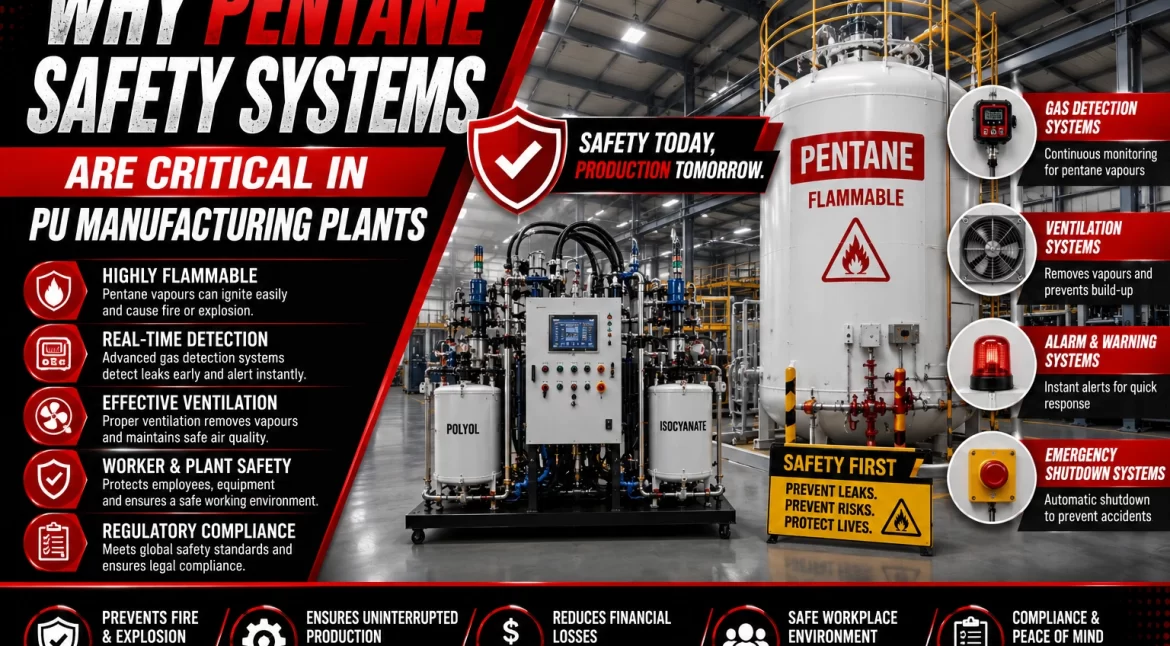
Because of this, pentane safety systems are not just an optional addition in polyurethane manufacturing plants. They are a critical requirement for safe operations, worker protection, regulatory compliance, and uninterrupted production. Without proper pentane handling and monitoring systems, manufacturing plants face significant risks, including fire accidents, explosions, equipment damage, and operational shutdowns.
Modern PU manufacturing facilities must therefore invest in advanced pentane safety systems to ensure a secure and efficient production environment.
Understanding Pentane in Polyurethane Manufacturing
Pentane is commonly used as a blowing agent in rigid polyurethane foam production. It helps create the foam’s cellular structure, which provides excellent thermal insulation properties. Pentane is widely used in industries manufacturing the following:
- Refrigeration insulation panels
- Cold storage solutions
- Sandwich panels
- Insulated doors
- Construction insulation materials
One of the main reasons for pentane’s popularity is its environmentally friendly characteristics compared to older blowing agents with higher ozone depletion potential.
However, despite its industrial advantages, pentane is extremely volatile and flammable. Even small vapour leaks can create hazardous conditions if proper ventilation and safety systems are not in place.
The Fire and Explosion Risk of Pentane
Pentane vapours can ignite very easily when exposed to sparks, heat sources, or electrical equipment. Since PU manufacturing plants often operate with multiple machines, chemical tanks, electrical systems, and enclosed production areas, the possibility of ignition becomes a major concern.
The key dangers associated with pentane include:
- Rapid vapour accumulation
- High flammability
- Explosion risk in enclosed spaces
- Static electricity ignition
- Worker exposure hazards
If pentane vapours are not detected and controlled early, they can quickly create an explosive atmosphere inside the plant.
This is why advanced pentane safety systems are essential for every facility handling pentane-based polyurethane production.
Importance of Gas Detection Systems
Gas detection systems are one of the most important components of pentane safety infrastructure. These systems continuously monitor pentane vapour levels in critical production zones.
Modern gas detection systems provide the following:
- Real-time vapour monitoring
- Automatic leak detection
- Early warning alarms
- Emergency shutdown activation
- Continuous safety monitoring
When vapour concentration exceeds safe limits, the system immediately alerts operators and can automatically trigger safety protocols to prevent accidents.
Without reliable gas monitoring, pentane leaks may go unnoticed until they become extremely dangerous.
Ventilation Systems Prevent Hazardous Vapour Build-Up
Proper ventilation is another critical aspect of pentane safety in PU manufacturing plants. Since pentane vapours are heavier than air, they can accumulate near floors, machinery, and enclosed spaces.
Industrial ventilation systems help by:
- Removing accumulated vapours
- Maintaining safe air quality
- Reducing explosion risks
- Improving workplace safety
Efficient airflow systems are carefully designed to ensure continuous vapour extraction from production and storage areas.
In facilities using high volumes of pentane, ventilation systems must operate continuously to maintain safe environmental conditions throughout the production process.
Explosion-proof equipment is essential
Standard industrial electrical equipment may generate sparks during operation. In a pentane-rich environment, even a minor spark can trigger a fire or explosion.
To minimise this risk, PU manufacturing plants use explosion-proof equipment such as the following:
- Explosion-proof motors
- Flameproof control panels
- Anti-static flooring
- Intrinsically safe sensors
- Spark-resistant electrical systems
These specialised systems are designed specifically for hazardous industrial environments and are critical for maintaining plant safety.
Using non-certified equipment in pentane processing areas significantly increases operational risks and may violate industrial safety regulations.
Protecting Workers and Plant Personnel
Employee safety is one of the most important reasons for implementing pentane safety systems. Workers in polyurethane plants may be exposed to pentane vapours during storage, mixing, dispensing, or maintenance operations.
Comprehensive safety systems help protect workers through:
- Vapour leak alerts
- Emergency evacuation systems
- Safe operating conditions
- Reduced toxic exposure risks
- Fire prevention measures
Training employees on pentane handling procedures is equally important. Workers must understand emergency response protocols and proper equipment usage to maintain a safe working environment.
A strong safety culture combined with advanced safety systems can significantly reduce workplace accidents.
Compliance with Industrial Safety Standards
Polyurethane manufacturing plants handling pentane must comply with strict industrial and environmental safety regulations. Regulatory authorities often require manufacturers to implement certified safety systems and follow hazardous material handling standards.
Compliance requirements may include:
- Gas detection systems
- Explosion-proof electrical installations
- Fire suppression systems
- Ventilation infrastructure
- Emergency shutdown mechanisms
Failure to comply with safety standards can result in:
- Legal penalties
- Production shutdowns
- Insurance complications
- Damage to business reputation
Investing in proper pentane safety infrastructure helps manufacturers meet industry regulations while ensuring long-term operational stability.
Fire Suppression Systems Improve Plant Safety
In addition to prevention systems, PU manufacturing plants also require effective fire suppression solutions.
Advanced fire protection systems may include:
- Automatic sprinkler systems
- Foam-based fire suppression
- Emergency water systems
- Fire-resistant barriers
- Smoke detection systems
Quick-response fire suppression systems help minimise damage and protect both personnel and equipment in case of emergencies.
Combining fire suppression with vapour monitoring and ventilation creates a complete safety ecosystem for pentane-handling facilities.
Minimising Production Downtime and Financial Losses
Industrial accidents involving pentane can lead to severe financial consequences. Fires, explosions, and safety failures may result in:
- Equipment damage
- Production stoppages
- Expensive repairs
- Product losses
- Legal liabilities
Pentane safety systems help manufacturers avoid these costly disruptions by preventing incidents before they occur.
A well-designed safety infrastructure improves operational continuity and supports stable production performance over the long term.
The Role of Automation in Pentane Safety
Modern PU manufacturing plants are increasingly adopting automated safety systems to improve response times and reduce human error.
Automated pentane safety systems can:
- Detect leaks instantly
- Trigger emergency shutdowns
- Activate ventilation systems automatically
- Send real-time alerts to operators
- Monitor plant safety continuously
Automation improves overall plant reliability and ensures faster emergency response during critical situations.
As manufacturing technology advances, intelligent safety monitoring systems are becoming a standard requirement in modern polyurethane production plants.
Future of Pentane Safety Systems
The future of pentane safety technology is focused on smarter, more efficient, and highly integrated systems.
Emerging innovations include:
- AI-powered gas monitoring
- Smart sensor networks
- Remote safety monitoring
- Predictive maintenance systems
- Integrated plant-wide automation
These technologies will help manufacturers improve safety standards while enhancing production efficiency and sustainability.
With stricter industrial regulations and growing emphasis on workplace safety, advanced pentane protection systems will continue to play a vital role in polyurethane manufacturing.
Conclusion
Pentane is an essential blowing agent in polyurethane manufacturing, but its highly flammable nature makes safety management extremely important. Pentane safety systems are critical for preventing fires, protecting workers, ensuring regulatory compliance, and maintaining uninterrupted production operations.
From gas detection and ventilation systems to explosion-proof equipment and automated monitoring, every safety component plays a crucial role in creating a secure manufacturing environment. Companies that invest in advanced pentane safety infrastructure not only reduce operational risks but also strengthen long-term business reliability and productivity.
FAQs
1. Why is pentane considered hazardous in PU manufacturing plants?
Pentane is highly flammable and can create explosive vapour-air mixtures if leaked into enclosed spaces. Proper safety systems are necessary to prevent fire and explosion risks.
2. What are the key components of a pentane safety system?
A complete pentane safety system includes gas detectors, ventilation systems, explosion-proof equipment, fire suppression systems, and emergency shutdown controls.
3. How do gas detection systems improve plant safety?
Gas detection systems continuously monitor pentane vapour levels and provide early warnings if concentrations exceed safe limits, helping prevent accidents before they occur.
4. Why is explosion-proof equipment important in pentane handling areas?
Explosion-proof equipment prevents sparks or electrical ignition sources that could ignite pentane vapours, significantly reducing fire and explosion risks.
Looking for reliable polyurethane manufacturing solutions with advanced safety integration?
Aryanvi PU Solutions provides high-quality PU foaming machines, pentane safety systems, and customised industrial solutions designed for safe, efficient, and modern polyurethane production. Partner with Aryanvi to build a safer and more productive manufacturing facility.