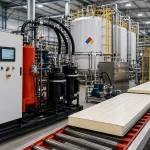
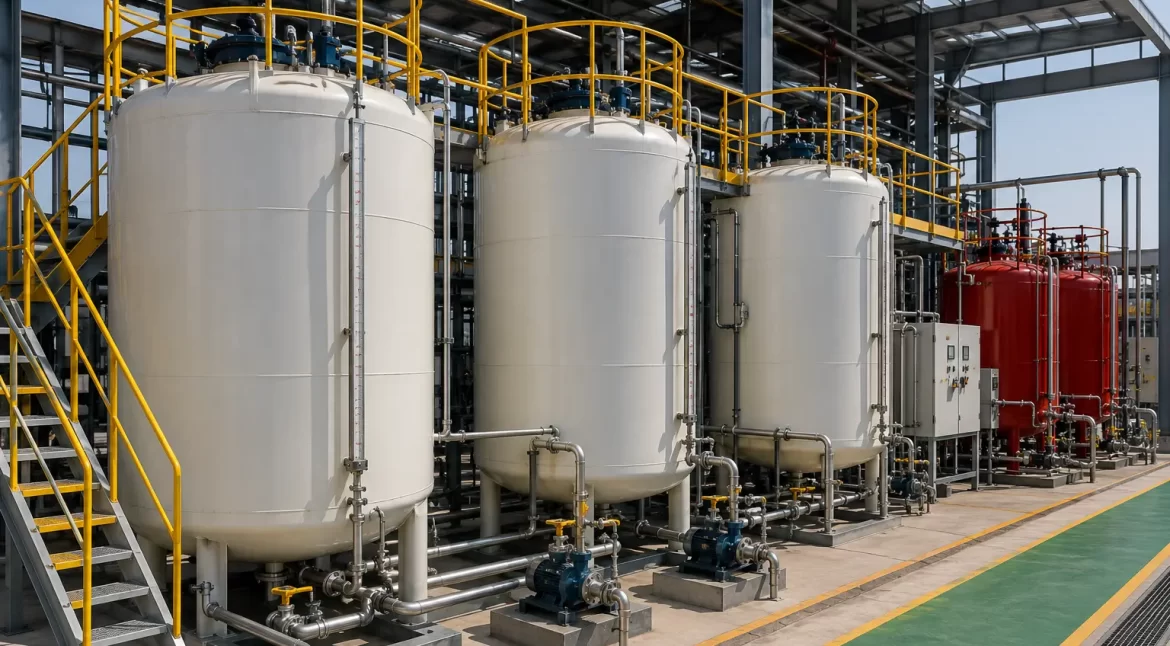
Storage tanks play a critical role in polyurethane manufacturing. Whether a plant uses polyol, isocyanate, pentane, or other chemical components, correct tank sizing helps maintain smooth production, reduce downtime, and improve material handling efficiency.
Choosing the wrong tank capacity can lead to frequent refilling, production interruptions, excess inventory, or unnecessary investment. This is why storage tank sizing should be planned carefully during the design of a PU production facility.
Why Storage Tank Sizing Matters
A properly sized storage tank ensures that raw materials are available when production is running. It also supports safe handling, stable chemical quality, and efficient plant operation.
Correct tank sizing helps manufacturers:
- Avoid frequent material shortages
- Reduce production downtime
- Improve bulk material handling
- Maintain process consistency
- Plan safe chemical storage
- Support future capacity expansion
Key Factors to Consider
1. Daily Material Consumption
The first step is calculating how much material your production line consumes per day.
This depends on:
- Product type
- Foam density
- Panel thickness
- Production speed
- Operating hours per day
- Number of production shifts
Higher production output naturally requires larger storage capacity.
2. Refill Frequency
Tank size should match the planned refill or delivery schedule.
For example:
- Daily delivery requires smaller tanks
- Weekly delivery requires medium tanks
- Monthly delivery requires larger tanks
A practical tank size should allow production to continue comfortably between refills.
3. Safety Stock Requirement
A safety margin should always be added to avoid unexpected shortages.
Common reasons for safety stock include:
- Supplier delays
- Transport issues
- Sudden production increases
- Material quality checks
- Emergency requirements
Many manufacturers keep additional storage capacity beyond daily consumption needs.
4. Chemical Type
Different chemicals may require different storage conditions.
Polyol Storage
Polyol tanks may need:
- Agitation
- Temperature control
- Moisture protection
- Proper transfer pumps
Isocyanate Storage
Isocyanate tanks may require:
- Dry nitrogen blanketing
- Moisture-free handling
- Sealed transfer systems
- Temperature control
Pentane Storage
Pentane tanks need special safety systems because pentane is highly flammable.
Important features include:
- Explosion-proof systems
- Grounding and bonding
- Ventilation
- Fire protection
- Leak detection
- Pressure relief systems
Basic Storage Tank Sizing Formula
A simple sizing approach is:
Tank Capacity = Daily Consumption × Number of Storage Days + Safety Margin
For example:
If daily consumption is 1,000 kg and storage is required for 7 days:
1,000 kg × 7 days = 7,000 kg
If a 20% safety margin is added:
7,000 kg + 20% = 8,400 kg
So, the recommended tank capacity should be approximately 8,400 kg.
Space and Layout Planning
Tank size should also match the available factory layout.
Before finalizing tank capacity, consider:
- Tank footprint
- Maintenance clearance
- Piping route
- Pump location
- Access platforms
- Safety distance
- Fire protection zone
- Material unloading area
Good layout planning improves safety and makes maintenance easier.
Material Delivery Method
Storage tank sizing also depends on how materials are supplied.
Drum Supply
Suitable for smaller operations but requires more manual handling.
IBC Supply
Useful for medium-scale plants with moderate consumption.
Bulk Tanker Supply
Best for large production plants where continuous material availability is required.
Bulk supply usually requires larger storage tanks and proper unloading systems.
Future Expansion Planning
Manufacturers should not size tanks only for current production. Future growth should also be considered.
Expansion factors may include:
- Additional production lines
- Higher shift operation
- New product categories
- Export production
- Automation upgrades
Planning for future capacity can reduce costly modifications later.
Common Tank Sizing Mistakes
Avoid these common errors:
- Selecting tanks based only on budget
- Ignoring refill lead time
- Not adding safety stock
- Overlooking chemical compatibility
- Poor layout planning
- Not considering future expansion
- Missing safety requirements for flammable materials
Why Engineering Support Is Important
Storage tank sizing is not only about capacity. It also involves safety, process design, material transfer, automation, and compliance.
Professional engineering support helps ensure:
- Correct tank capacity
- Proper material handling
- Safe piping design
- Efficient pumping systems
- Temperature control
- Reliable automation
- Long-term operational safety
How Aryanvi PU Solutions Can Help
Aryanvi PU Solutions provides complete storage system engineering for polyurethane manufacturing plants.
Our solutions include:
- Storage tank sizing
- Chemical storage system design
- Pentane storage systems
- Transfer pumps and piping
- Safety system integration
- Installation and commissioning
- Retrofitting of existing systems
- Technical consultancy
Conclusion
Correct storage tank sizing is essential for efficient and safe PU manufacturing. The right tank capacity should be based on daily consumption, refill schedule, safety stock, chemical type, available space, and future expansion plans.
A well-designed storage system helps reduce downtime, improve production reliability, and support long-term manufacturing growth.